



JB
Muke Johnbaptist
Go (Golang) expert · Creator of the Grit Framework
Ship Self-Promo Banner Ads on Your Next.js Site with beautiful-banner-ads
How I built the rotating corner banners on jb.desishub.com — 5 product ads rotating every 30s, alternating bottom-right and bottom-left, dismissible for 7 days, in ~40 lines of React. Plus the 8 GitHub issues I filed along the way and the CSS overrides you actually need.
Ship Self-Promo Banner Ads on Your Next.js Site with beautiful-banner-ads
Last updated: June 2026 · By JB (Muke Johnbaptist) — this is the exact banner-ads setup running on jb.desishub.com right now, rotating five of my own products through the bottom corners every 30 seconds.
If your blog gets meaningful traffic and you sell your own products, you don't need AdSense — you need a tasteful self-promotion slot. Something that:
- Rotates through several of your own offers without you wiring up a
setInterval, - Lives in a screen corner that doesn't fight the article,
- Lets the reader dismiss it for a sane stretch of time (7 days, not forever and not every page-load),
- Renders a real product image, not just a text strip,
- And takes ~40 lines of code to ship.
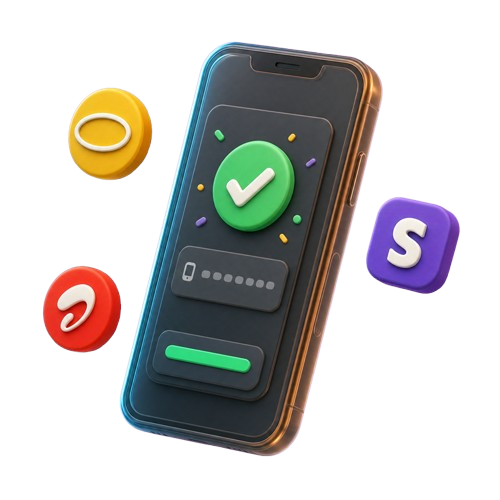
That's what beautiful-banner-ads is for. This post is the exact setup I'm running on jb.desishub.com — five product ads (DGateway, WesendAll, Grit Framework, Nexora AI, Vibekit) rotating through the bottom-right and bottom-left corners, dismissible for a week, with the clay-render product imagery you've probably seen if you've spent more than 30 seconds on this site.
It also walks through the eight GitHub issues I filed against the package while building this and the package upgrades that landed because of them — because a real-world adoption story is the most useful kind of "getting started" guide.
What you'll build
┌─────────────────────────────────────────────────────────┐
│  Your Next.js page                                      │
│                                                         │
│   ... your blog content ...                             │
│                                                         │
│                          ┌─────────────────────────┐    │
│                          │ PAYMENTS              x │    │
│                          │ Accept Mobile Money     │    │
│                          │ in your app             │    │
│                          │ MTN MoMo, Airtel...   📱 │    │
│                          │ [ Try DGateway ]        │    │
│                          └─────────────────────────┘    │
└─────────────────────────────────────────────────────────┘
                                          ↓ every 30s
rotates ad + cornerA persistent docked banner in the bottom corner. Five ads cycle every 30 seconds. After a full pass, the slot jumps to the opposite corner. Dismissing it hides it for 7 days, then it quietly tries again.
1. Install the package
pnpm add beautiful-banner-ads
# or: npm i beautiful-banner-ads
# or: yarn add beautiful-banner-adsIt's framework-agnostic React — works in Next.js (App Router or Pages), Vite, Remix, anything that renders React. There's no peer dependency on Tailwind or a UI kit; the styles are auto-injected on mount.
2. Build the rotator component
Create src/components/site-banner-ads.tsx. This is the whole thing, end-to-end:
"use client";

import {
  AdSlot,
  type BannerConfig,
  BrandedBanner,
  createExpiringStorage,
} from "beautiful-banner-ads";
import { useMemo } from "react";

const ROTATION_INTERVAL_MS = 30_000;
const DISMISS_WINDOW_DAYS = 7;
// 520px on wide viewports, otherwise shrink to fit with a 24px margin
// on each side (matches `offset={24}` so the banner stays balanced).
const BANNER_WIDTH = "min(520px, calc(100vw - 48px))";

const ADS: readonly BannerConfig[] = [
  {
    id: "promo-dgateway",
    eyebrow: "PAYMENTS",
    title: "Accept Mobile Money in your app",
    subtitle: "MTN MoMo, Airtel & Stripe — one API.",
    cta: { label: "Try DGateway", href: "https://dgateway.desispay.com" },
    image: {
      src: "/trans-ads/smartphone_payment_render.png",
      alt: "DGateway — mobile payment success on smartphone",
      fit: "contain",
      position: "center",
    },
  },
  {
    id: "promo-wesendall",
    eyebrow: "BULK MESSAGING",
    title: "Bulk SMS & Email from one dashboard",
    subtitle: "Built for African senders.",
    cta: { label: "Start sending", href: "https://www.wesendall.com" },
    image: {
      src: "/trans-ads/envelope_render.png",
      alt: "WesendAll — envelope with SMS and email satellites",
      fit: "contain",
      position: "center",
    },
  },
  // ...repeat for every product you want in the rotation
];

export function SiteBannerAds() {
  const storage = useMemo(
    () => createExpiringStorage({ days: DISMISS_WINDOW_DAYS }),
    []
  );

  return (
    <AdSlot
      ads={ADS}
      rotate={{ interval: ROTATION_INTERVAL_MS, pauseOnHover: true }}
      position="corner"
      corner={["bottom-right", "bottom-left"]}
      offset={24}
      width={BANNER_WIDTH}
      storage={storage}
      dismissible
      layout="image-right"
    >
      {(config) => <BrandedBanner config={config} />}
    </AdSlot>
  );
}Then mount it once in your root layout:
// src/app/layout.tsx
import { SiteBannerAds } from "@/components/site-banner-ads";

export default function RootLayout({ children }) {
  return (
    <html>
      <body>
        {children}
        <SiteBannerAds />
      </body>
    </html>
  );
}That's the entire integration. Let's unpack what each piece is doing.
3. The pieces, explained
ads — your product catalog
A plain readonly array of BannerConfig objects. Each ad gets a stable id (used as the dismissal storage key), an eyebrow (the tiny label above the title), a title, subtitle, a cta with label + href, and an image.
The image field accepts either a string URL or { src, alt, fit, position }. For transparent product renders I always want fit: "contain" so the image scales without cropping.
rotate — the cycle
rotate={{ interval: 30_000, pauseOnHover: true }}The package handles the timer internally — no setInterval in your component. pauseOnHover is what keeps readers from losing an ad mid-read because the rotation fired while their cursor was hovering on the CTA.
corner={[...]} — alternating placement
Pass an array of corners and the slot will advance to the next corner after every full pass through the ads. So if you have 5 ads on a 30s rotation, the slot stays in bottom-right for 2.5 minutes, then jumps to bottom-left, then back. No drift, no separate timer, no useEffect you need to write.
storage={createExpiringStorage({ days: 7 })} — respect the user
When a reader dismisses a banner you want to remember that for a while, but not forever. createExpiringStorage writes to localStorage with a TTL, and on get-time it transparently expires anything older than N days. So "not now" hides the slot for a week, then it quietly comes back.
The factory returns undefined on the server (SSR-safe), so a single call site works for both render passes.
dismissible + layout — cascade defaults
AdSlot cascades these defaults into every child ad's effective config. As of v0.4.0 they also propagate into the config object passed to children-as-function, so the inner <BrandedBanner config={config} /> picks them up without re-stating them. Less to maintain.
children-as-function — why we don't use the default renderer
AdSlot's default renderer is BannerAd, which is text-only and silently ignores config.image. If you want an actual product render, you have to provide a render function and use BrandedBanner (or MediaBanner for video). That's this part:
{
  (config) => <BrandedBanner config={config} />;
}The config you receive is the active ad's BannerConfig already merged with the slot's cascaded defaults.
4. The CSS overrides you'll probably need
Here's the part nobody tells you. The package's branded layout is tuned for a 930×180 leaderboard, not a 520px corner banner. Drop it in unchanged and you'll get a 36px title that wraps three times and a 1024×1024 product image that fills the entire card.
These overrides — pasted at the bottom of globals.css — are the ones I'm running:
/* Cap the image and its flex slot so the body column gets real estate. */
.bba-banner-branded .bba-banner__media {
  flex: 0 0 140px !important;
  width: 140px !important;
  height: 140px !important;
}
.bba-banner-branded__image {
  max-width: 140px !important;
  max-height: 140px !important;
  width: 100% !important;
  height: 100% !important;
  object-fit: contain !important;
}

/* Bring the leaderboard-tuned type down to corner-banner size. */
.bba-banner-branded .bba-banner__title {
  font-size: 1.25rem !important;
  line-height: 1.25 !important;
}
.bba-banner-branded .bba-banner__subtitle {
  font-size: 0.875rem !important;
  line-height: 1.4 !important;
}
.bba-banner-branded .bba-banner__eyebrow {
  font-size: 0.6875rem !important;
  margin-bottom: 0.125rem !important;
}

/* Dock the close button to the top-right corner of the card. */
.bba-banner-branded {
  position: relative !important;
}
.bba-banner-branded .bba-banner__close {
  position: absolute !important;
  top: 8px !important;
  right: 8px !important;
  z-index: 2 !important;
}

/* Grid layout so the CTA stacks UNDER the body, not beside it. */
.bba-banner-branded {
  display: grid !important;
  grid-template-columns: 1fr 140px !important;
  grid-template-areas:
    "body  image"
    "cta   image" !important;
  gap: 0.75rem 1rem !important;
  align-items: start !important;
  padding: 1rem 1.25rem !important;
}
.bba-banner-branded .bba-banner__body {
  grid-area: body;
  min-width: 0;
}
.bba-banner-branded .bba-banner__cta {
  grid-area: cta;
  justify-self: start;
  align-self: end;
}
.bba-banner-branded .bba-banner__media {
  grid-area: image;
  align-self: center;
}

/* Phone-width tune — shrink image column + drop type one notch. */
@media (max-width: 480px) {
  .bba-banner-branded {
    grid-template-columns: 1fr 88px !important;
    gap: 0.5rem 0.75rem !important;
    padding: 0.75rem 0.875rem !important;
  }
  .bba-banner-branded .bba-banner__media,
  .bba-banner-branded__image {
    width: 88px !important;
    height: 88px !important;
    max-width: 88px !important;
    max-height: 88px !important;
  }
  .bba-banner-branded .bba-banner__title {
    font-size: 1rem !important;
  }
  .bba-banner-branded .bba-banner__subtitle {
    font-size: 0.75rem !important;
  }
  .bba-banner-branded .bba-banner__cta {
    font-size: 0.8125rem !important;
    padding: 0.5rem 1rem !important;
  }
}Pair that with a responsive BANNER_WIDTH on the AdSlot itself — min(520px, calc(100vw - 48px)) — and the slot is well-behaved from a 360px phone all the way up to a wide desktop.
A few notes on why these need !important:
- The package wraps every internal selector in
:where()so its specificity is zero. A normal class selector should win — and does, when the styles are in source order. But the package injects its<style>tag at runtime viauseInjectStyles, after your compiled CSS link in<head>. Source order ends up beating specificity, so!importantremoves the ambiguity. - The grid override replaces the package's
flex-direction: row-reverselayout entirely. Without it, the CTA pill — which is a row sibling — lands on the LEFT side of the body (visually disconnected from the title and subtitle it goes with).
If you only ever use the leaderboard size on a desktop hero, you can skip all of this. For corner banners on a content site, you'll want it.
5. The eight issues I filed (and why this is the real "getting started" story)
When I first dropped the package in I hit a series of small frictions — every one of them a "this should just work" moment. I filed them as issues against MUKE-coder/beautiful-banner-ads and the package author shipped fixes for all eight across v0.2.0, v0.3.1, and v0.4.0.
If you adopt the package today on v0.4.0+, you inherit every one of these wins for free:
| # | Friction | Shipped in |
|---|---|---|
| 1 | Storage adapter couldn't ride along inside a serializable BannerConfig — needed a separate storage prop on AdSlot. | 0.2.0 |
| 2 | I'd hand-rolled a 25-line createSevenDayStorage wrapper. Filed: ship this as a first-class helper. | 0.2.0 — now createExpiringStorage({ days }) |
| 3 | BannerConfig had no image field, so children-as-function consumers couldn't render product imagery from the config object alone. | 0.3.1 |
| 4 | Cascading slot props (width, dismissible, layout) onto child banners required re-stating them on every ad. | 0.3.1 |
| 5 | Alternating corners across a cycle required an external setInterval that would drift relative to the rotation timer. | 0.3.1 — now corner={["bottom-right", "bottom-left"]} |
| 6 | No way to know "the rotator just finished a full pass" without race-conditioning your own timer. | 0.3.1 — now onCycleComplete callback |
| 7 | ImageInput needed width/height for CLS prevention and fit/position for layout control. | 0.3.1 |
| 8 | Cascade props auto-applied to the default BannerAd renderer but didn't merge into the config object passed to children-as-function. | 0.4.0 |
The big take-away: if a library makes you write the same five lines on top of it every time, file the issue. Don't paper over it forever. Most maintainers will either ship the helper or tell you why the friction exists — both outcomes beat carrying the workaround.
6. What this gets you
On jb.desishub.com right now this exact setup is:
- Surfacing five of my own products to every reader, weighted purely by which one cycles in front of them.
- Costing zero ad-network revenue share — every click goes straight to my product, not Google's middleman.
- Costing ~40 lines of component code + ~30 lines of CSS overrides.
- Respecting "not now" for a week without nagging.
- Carrying its own rotation, corner-alternation, hover-pause, and dismissal storage — nothing for me to maintain after the initial wiring.
If you have your own products and a blog with traffic, this is the lowest-friction self-promo channel I've shipped. Drop in the component, write your ad copy as a BannerConfig[], paste the CSS overrides, and you're done.
Further reading
- beautiful-banner-ads on npm
- Source repo (MUKE-coder/beautiful-banner-ads) — the 8 issues above are all browsable in the Closed tab
- DGateway — mobile money payments, the first ad in my rotation
- Grit Framework, the multi-client SaaS framework that powers most of what I ship