



JB
Muke Johnbaptist
Go (Golang) expert · Creator of the Grit Framework
Design & Visuals
Education Slide Design — Journal Style
A graphic design of a clean, aesthetic education slide template, set against a subtle off-white square grid paper background with faint parchment texture, referencing image_0.png. The overall composition is a modern journal-style layout. In the top-left, the bold title "Prompt Engineering" is present, with the word 'Prompt' in deep black and 'Engineering' in a warm golden-mustard color, partially layered over a large white watercolor brush stroke. Below this title, two informational sections are organized with subheaders over muted tan-peach watercolor brush strokes: first, "What it is", with a hand-drawn grey arrow pointing to text: "It's the difference between generic AI output and answers you can actually execute.", marked by a golden four-point sparkle bullet; and second, "Why it matters", with a similar arrow to text: "It matters when you need strategy and operational thinking – not just chatbot replies.", also marked by a sparkle bullet. Centered in the lower half is a row of four distinct, rounded-square (squircle) app icons: the green OpenAI/ChatGPT logo, the blue Google Gemini gradient sparkle, the terracotta Anthropic Claude asterisk, and the black-and-white geometric Perplexity logo, each with its name in small, bold text below (ChatGPT, Gemini, Claude, Perplexity). A clean footer section spans the bottom, containing the Instagram logo and handle "Instagram @Roman.Knox" on the far left, a central "Page 1/9" text element, and a "swipe ←" pill button on the right. In the top-right corner, a dark, pill-shaped badge displays the text "2/10". The design has generous negative space, maintaining a clear, readable hierarchy.
How to use
Use this prompt in NotebookLM or any image-generating AI to create clean, aesthetic education slides. Replace the topic title (e.g., 'Prompt Engineering') and section content with your own subject matter.
Isometric Infographic — Process Flow Diagram
A clean, modern isometric 2D infographic diagram on a minimalist cream background. The top features a bold sans-serif title: '[INSERT YOUR TOPIC HERE]'. Below the title, four rounded-square cards are arranged in a horizontal row, each containing a 3D-shaded, stylized icon in a warm orange and red color scheme. Between the cards are thin directional arrows showing a process flow. Include a secondary floating card at the top right representing '[INSERT SECONDARY CONTEXT]'. Scatter subtle tech-related decorative elements like code brackets, signal waves, and soft sparkles around the diagram. Professional, sleek, and high-resolution, similar to a high-end tech blog illustration.
How to use
Use in any image-generating AI (Midjourney, DALL-E, Ideogram, NotebookLM). Replace '[INSERT YOUR TOPIC HERE]' with your subject and '[INSERT SECONDARY CONTEXT]' with supporting context like a tool name, category, or subtitle.
YouTube Thumbnail — Bold & Clickable
A bold, high-contrast YouTube thumbnail design at 1280x720 resolution. The left side features a half-body cutout photo of a person with an exaggerated surprised expression, pointing toward the right. The right side has large, 3D-extruded bold text saying "STOP DOING THIS" in white with a red drop shadow, placed over a vibrant gradient background transitioning from deep navy blue to electric purple. A bright yellow arrow points from the person to the text. The bottom-right corner has a small red pill badge with "2025" in white. The overall style is high-energy, clean, and optimized for click-through rate — no clutter, maximum readability at small sizes.
How to use
Paste into an image AI (Midjourney, DALL-E, Ideogram). Replace the topic, text, and color scheme to match your video. Works best at 1280x720.
Product Mockup — Minimal Floating Style
A minimal, premium product mockup scene on a clean matte white background. A sleek matte-black wireless earbud case is floating at a slight angle with a soft shadow beneath it, as if suspended in mid-air. Two earbuds are floating nearby, slightly separated from the case. Soft, diffused studio lighting from the top-left creates gentle highlights and shadows. The composition is centered with generous negative space. The style is Apple-inspired product photography — clean, luxurious, and modern. No text, no logos, no distractions. Photorealistic rendering, 4K quality.
How to use
Use in any image AI to generate product mockups for your store, landing page, or social ads. Replace the product description with your own item.
Peaceful Meadow Portrait — Journaling in Nature
Make a picture of this man without changing his face and hair, with a very calm composition, accentuating the feeling of peaceful solitude and focus in the middle of nature. In the middle of the grass bed, there was a man sitting on a black folding chair (camping chair). He looked very diligent in writing or drawing in a large white notebook open on his lap. He wore an outfit and glasses according to the uploaded references. He also wore headphones according to the uploaded references, indicating that he was listening to music to help his concentration. His hair was a little messy in the wind. He sat in a relaxed position but remained upright, giving the impression that he was very immersed in his activities. Photos are taken remotely using a long shot technique. The photographer seems to be shooting from behind a mound of grass or bush, creating a large green bokeh effect in the foreground section. The use of a plant on the front and a tree branch on the upper right forms a natural frame that directs the viewer's eyes directly to the subject in the center of the image. The human subject looks small compared to the extent of the green expanse, emphasizing a positive sense of solitude and the tranquility of open spaces. The background is a sloping hill or meadow with a fresh and even green color. The texture of the grass looks smooth. On the upper right side there is a tree branch with lush green leaves, giving a little shady impression to the composition of the picture. In the upper left distance, you can see a small portion of a trail or a lighter area of land. Lighting looks soft and even, as on a slightly cloudy day or late afternoon, without sharp shadows or distracting contrast. The dominant colors in this photo are dark green and light green, which psychologically provide a calming and refreshing effect. The contrast between the subject's black clothing and white headphones keeps the young man's figure prominent without damaging the natural color harmony around him. Aspect ratio 3:4
How to use
Use in an image AI that accepts reference photos (Gemini / Nano Banana, ChatGPT image input, Midjourney with --cref). Upload a clear photo of yourself plus references for the outfit, glasses, and headphones — the prompt keeps your face and hair unchanged. Output at 3:4 for portrait posts.
Product Mockup — Offline-First POS Dashboard
SHARED STYLE: A clean, modern product-UI screenshot shown inside a subtle floating browser/app window with a soft shadow, on a neutral light-grey studio background, crisp and premium, Apple-keynote product-shot lighting, 16:9, no text overlays or added logos beyond what is on screen. SCREEN CONTENT: a desktop point-of-sale dashboard for a phone and electronics shop. A product grid on the left with phones and accessories, a cart/checkout panel on the right showing line items and a total, a bold green status pill reading "OFFLINE — still selling", and a top row of small stat cards showing inventory count and products tracked. Warm, trustworthy, retail feel. A subtle cyan (#22D3EE) accent on the active button.
How to use
Use in any image AI (Gemini/Nano Banana, Midjourney, Ideogram). Part of a coherent portfolio mockup set — keep the SHARED STYLE line identical across all product shots so the cards read as one system. Output 16:9, save as /public/products/<name>.webp.
Product Mockup — Unified Payments Dashboard
SHARED STYLE: A clean, modern product-UI screenshot shown inside a subtle floating browser/app window with a soft shadow, on a neutral light-grey studio background, crisp and premium, Apple-keynote product-shot lighting, 16:9, no text overlays or added logos beyond what is on screen. SCREEN CONTENT: a payments dashboard for East Africa. A unified transactions table with rows tagged by payment method — MTN Mobile Money, Airtel Money, and card/Stripe — each shown as a small coloured method icon. A large balance card at the top, a "Collect / Disburse" segmented toggle, and a simple volume chart. Confident fintech feel, subtle cyan (#22D3EE) accent.
How to use
Image AI, 16:9. Keep the SHARED STYLE line identical to the other product mockups for a coherent set. Save as /public/products/dgateway.webp.
Product Mockup — AI Agent Builder
SHARED STYLE: A clean, modern product-UI screenshot shown inside a subtle floating browser/app window with a soft shadow, on a neutral light-grey studio background, crisp and premium, Apple-keynote product-shot lighting, 16:9, no text overlays or added logos beyond what is on screen. SCREEN CONTENT: an AI-agent builder platform. On the right, a chat widget preview answering a customer's question in a friendly bubble UI. On the left, a "Trained on your data" sources panel listing uploaded documents, and a "Deploy to channels" row with web and WhatsApp toggles. Modern AI-SaaS aesthetic, generous whitespace, a glowing cyan (#22D3EE) accent.
How to use
Image AI, 16:9. Keep the SHARED STYLE line identical. Save as /public/products/nexora.webp.
Product Mockup — AI Accounting Dashboard
SHARED STYLE: A clean, modern product-UI screenshot shown inside a subtle floating browser/app window with a soft shadow, on a neutral light-grey studio background, crisp and premium, Apple-keynote product-shot lighting, 16:9, no text overlays or added logos beyond what is on screen. SCREEN CONTENT: a smart accounting dashboard. An invoices list with status chips (Paid / Overdue), a cash-flow line chart trending up, and summary cards for expenses and payroll. A small "AI auto-categorised" tag on a transaction row. Calm, clean, trustworthy finance-software feel, subtle cyan (#22D3EE) accent.
How to use
Image AI, 16:9. Keep the SHARED STYLE line identical. Save as /public/products/fynol.webp.
Product Mockup — School Management App
SHARED STYLE: A clean, modern product-UI screenshot shown inside a subtle floating browser/app window with a soft shadow, on a neutral light-grey studio background, crisp and premium, Apple-keynote product-shot lighting, 16:9, no text overlays or added logos beyond what is on screen. SCREEN CONTENT: a multi-school management desktop app. A students roster table with names and classes, a term-fees / billing panel showing paid vs outstanding, and an attendance widget with a small calendar. A subtle "Offline-ready" badge in the corner. Friendly, organised EdTech feel, subtle cyan (#22D3EE) accent.
How to use
Image AI, 16:9. Keep the SHARED STYLE line identical. Save as /public/products/nexus.webp.
Product Mockup — Full-Stack Component Library
SHARED STYLE: A clean, modern product-UI screenshot shown inside a subtle floating browser/app window with a soft shadow, on a neutral light-grey studio background, crisp and premium, Apple-keynote product-shot lighting, 16:9, no text overlays or added logos beyond what is on screen. SCREEN CONTENT: a developer-tooling landing/docs screen. A dark terminal window running a CLI install command with a blinking cursor, beside a grid of ready-made feature blocks shown as cards — "Auth", "Payments", "File Storage", "Notifications". Code-forward, premium dev-tool aesthetic, monospace touches, a glowing cyan (#22D3EE) accent.
How to use
Image AI, 16:9. Keep the SHARED STYLE line identical. Save as /public/products/omnistack.webp.
Vercel-Inspired Slide Redesign System
Redesign all slides using a Vercel-inspired design system. Follow these rules: FONTS Use Geist Sans for all text, Geist Mono for code, commands, and labels. Titles: 40–52pt Bold. Body: 14–16pt, color #888888. Labels: 10pt Mono, ALL CAPS, letter-spacing 0.1em. COLORS Light slides: White #FFFFFF background, black #000000 titles Dark slides: Black #000000 background, white #FFFFFF titles Cards: #F2F2F2 background, 1px border #E5E5E5, 8px radius Accent: #0070F3 (Vercel blue) — use on top border of cover slide only Muted text: #888888. Code background: #0A0A0A. Borders: #333333 LAYOUT - Cover + section break slides: BLACK background - Content slides: WHITE background - Left-align everything. No centered body text. - Generous whitespace — never fill every inch - Section label (Geist Mono, ALL CAPS, #888888) above every title - Stats displayed as large numbers (64pt Bold) in a horizontal row with thin 1px vertical dividers between them - Tech tags as fully-rounded pills with 1px border, no fill - Code blocks styled as terminal windows with ●●● dots in the top bar AVOID No colorful gradients, no neon colors, no drop shadows, no emoji in body content, no fonts other than Geist Sans and Geist Mono. GOAL: Clean, minimal, premium — like Vercel.com or Next.js Conf slides. Typography does the heavy lifting. Apply to every slide.
How to use
Use this prompt in any AI slide generator or image AI (NotebookLM, Gamma, ChatGPT, Claude). Paste it before or after your slide content to enforce a consistent Vercel/Next.js Conf aesthetic across all slides.
Content Creation
SEO Blog Post Outline Generator
You are an expert SEO content strategist. Create a detailed blog post outline for the topic "[TOPIC]" targeting [AUDIENCE]. The primary keyword is "[KEYWORD]". Include: 1. A compelling title with the keyword naturally placed (under 60 characters) 2. A meta description (under 155 characters) 3. An introduction hook that addresses the reader's pain point 4. 5-7 H2 sections, each with 2-3 H3 sub-points and a one-sentence summary of what to cover 5. A "Key Takeaways" section with 3-5 bullet points 6. A call-to-action conclusion 7. 5 internal linking opportunities (suggest anchor text) 8. 3 FAQ questions for a schema-ready FAQ section Format the outline in markdown. Make every section actionable — no fluff.
How to use
Paste into ChatGPT or Claude. Replace [TOPIC] with your subject, [AUDIENCE] with your target reader, and [KEYWORD] with your main SEO keyword.
Viral Twitter/X Thread Writer
Write a 10-tweet thread about [TOPIC] that is designed to go viral. Follow these rules: Tweet 1 (Hook): Start with a bold, contrarian, or curiosity-driven statement. Use "Most people..." or "I spent X hours..." format. End with "A thread 🧵" Tweets 2-9 (Body): Each tweet should: - Start with a number or transition word - Contain exactly ONE idea - Be under 280 characters - Use simple, punchy sentences - Include a specific example, stat, or actionable tip - Avoid generic advice — be specific and opinionated Tweet 10 (CTA): Summarize the key insight, ask for a retweet, and invite followers to follow for more. Format: Number each tweet. Separate with "---". Make every tweet standalone-valuable so it works even if shared individually.
How to use
Use in ChatGPT or Claude. Replace [TOPIC] with what you want to teach or share. Great for building authority on X/Twitter.
Newsletter Welcome Email Sequence
You are an expert email copywriter. Write a 5-email welcome sequence for [BRAND], a [NICHE] business. The subscriber signed up to receive [LEAD_MAGNET]. Email 1 (Day 0 — Immediate): Deliver the lead magnet, introduce yourself in 2-3 sentences, set expectations for what emails they'll receive. Email 2 (Day 1 — Story): Share your origin story or a customer transformation story. End with a soft CTA to reply with their biggest challenge. Email 3 (Day 3 — Value): Teach one actionable tip they can implement in under 10 minutes. Include a step-by-step breakdown. Email 4 (Day 5 — Social Proof): Share 2-3 testimonials or case study results. Address common objections naturally within the narrative. Email 5 (Day 7 — Offer): Present your main product/service as the natural next step. Use a clear value proposition, 3 bullet-point benefits, urgency element, and a single CTA button text. For each email provide: Subject line (under 50 chars), preview text (under 90 chars), body copy, and CTA. Tone: conversational, confident, not salesy.
How to use
Use in any AI chatbot. Replace [BRAND], [NICHE], and [LEAD_MAGNET] with your details. Copy each email into your email marketing tool.
YouTube Video Script — Hook Framework
Write a YouTube video script for a 10-minute video about [TOPIC] for [AUDIENCE]. Structure: HOOK (0:00-0:30): Open with a bold claim, shocking stat, or "what if" question. Create an open loop — tease what they'll learn but don't reveal it yet. Example: "By the end of this video, you'll know the exact method that [result]." INTRO (0:30-1:00): Briefly establish credibility. Tell them exactly what they'll learn (3 points). Ask them to like/subscribe ONLY after delivering a quick win. BODY — Section 1 (1:00-3:30): First teaching point. Use the "What → Why → How" framework. Include a real example or demonstration. BODY — Section 2 (3:30-6:00): Second teaching point with a common mistake to avoid. Use pattern interrupts ("Now here's where it gets interesting..."). BODY — Section 3 (6:00-8:30): Third and most valuable point. Save the best for last. Include an actionable step-by-step. OUTRO (8:30-10:00): Recap the 3 points in one sentence each. Deliver on the open loop from the hook. CTA: suggest a related video. End with a memorable one-liner. Mark each section with timestamps. Write in conversational tone — short sentences, rhetorical questions, direct address ("you").
How to use
Paste into ChatGPT or Claude. Replace [TOPIC] and [AUDIENCE]. Use the output as a script foundation, then add your personality.
Business & Strategy
One-Page Business Model Canvas
You are a startup advisor and business strategist. Create a complete Business Model Canvas for this business idea: [BUSINESS_IDEA]. Fill out each section with specific, actionable details (not generic advice): 1. **Value Proposition**: What unique problem do you solve? Why would someone choose you over alternatives? 2. **Customer Segments**: Define 2-3 specific personas with demographics, pain points, and buying behavior. 3. **Channels**: How will you reach customers? List 3 acquisition channels ranked by cost-effectiveness. 4. **Customer Relationships**: How do you retain customers? (self-serve, community, personal, automated?) 5. **Revenue Streams**: Pricing model, price points, projected monthly revenue at 100/500/1000 customers. 6. **Key Resources**: What do you need to build this? (tech, people, IP, capital) 7. **Key Activities**: Top 3 activities that drive growth in the first 6 months. 8. **Key Partnerships**: Who do you need to partner with? What's in it for them? 9. **Cost Structure**: Fixed vs variable costs. Monthly burn rate estimate. End with a "Riskiest Assumption" section — identify the #1 thing that could kill this idea and how to test it in under 2 weeks with under $100.
How to use
Use in ChatGPT or Claude. Replace [BUSINESS_IDEA] with your concept. Perfect for validating a new idea or refining an existing one.
Product Pricing Strategy Advisor
You are a pricing psychologist and revenue strategist. Analyze and recommend a pricing strategy for: Product: [PRODUCT] Target market: [TARGET_MARKET] Current price (if any): [CURRENT_PRICE] Provide: 1. **Value Metric Analysis**: What should the price be anchored to? (per user, per result, per month, one-time?) 2. **Three-Tier Pricing Structure**: Design Basic / Pro / Premium tiers with specific feature splits that maximize upgrade motivation. 3. **Price Anchoring Strategy**: How to present pricing so the middle tier feels like the obvious choice. 4. **Psychological Triggers**: Recommend 3 pricing psychology tactics (charm pricing, decoy effect, loss framing, etc.) with specific implementation. 5. **Competitor Positioning**: How to position your price relative to competitors — premium, value, or undercut strategy? Why? 6. **Launch Pricing Playbook**: Suggest an introductory pricing strategy (early bird, founding member, beta discount) with timeline. 7. **Revenue Projection**: Simple math — at your recommended price, how many sales/month to hit $5K, $10K, $25K MRR? Be specific with numbers. No vague advice like "price based on value" — give actual recommended price points with reasoning.
How to use
Use in any AI chatbot. Replace [PRODUCT], [TARGET_MARKET], and [CURRENT_PRICE] with your details. Great for course creators, SaaS founders, and freelancers.
Freelance Client Proposal Generator
Write a professional freelance project proposal for: Client: [CLIENT_NAME] Project: [PROJECT_DESCRIPTION] My role: [YOUR_ROLE — e.g., fullstack developer, designer, content strategist] Budget range: [BUDGET] Timeline: [TIMELINE] Include these sections: 1. **Executive Summary** (3 sentences max — what you'll deliver and the business impact) 2. **Understanding of the Problem** (show you understand their pain point, reference something specific about their business) 3. **Proposed Solution** (high-level approach in 3-4 bullet points) 4. **Scope of Work** (detailed deliverables table with: deliverable, description, timeline) 5. **Timeline & Milestones** (visual timeline with 3-4 milestones and what gets delivered at each) 6. **Investment** (present pricing with clear value justification — avoid the word "cost") 7. **Why Me** (3 bullet points — relevant experience, unique advantage, proof of results) 8. **Next Steps** (clear CTA — what happens if they say yes, including a specific date to start) Tone: Professional but warm. Confident, not desperate. Focus on outcomes, not hours.
How to use
Use in ChatGPT or Claude. Replace the bracketed fields with your project details. Copy the output into Google Docs or Notion and customize with your branding.
Developer Productivity
Pixel-Perfect UI Redesign from a Screenshot
Redesign the exact section shown in the image with pixel-perfect accuracy. Follow these strict rules: **Layout & Structure** — Replicate the exact layout, spacing, padding, margins, alignment, and positioning of every element. Do not add, remove, or rearrange any section, block, or component. **Typography** — Match the exact font sizes, font weights, line heights, letter spacing, and text hierarchy. Preserve all text content exactly as shown. **Colors** — Use the exact colors for backgrounds, text, borders, icons, buttons, and any decorative elements. Extract colors precisely from the image. **Patterns & Textures** — Recreate any background patterns, gradients, overlays, noise textures, or decorative shapes exactly as they appear. **Components & UI Elements** — Replicate every button, card, icon, image placeholder, input, tag, badge, or divider with the exact same style, shape, size, and visual treatment. **Imagery & Icons** — Match icon styles, sizes, and placements. Use placeholder images that match the exact dimensions and aspect ratios shown. **Effects & Details** — Include any shadows, border radius, borders, hover states, or other visual effects visible in the image. **No Additions or Omissions** — Do not add anything not visible in the image. Do not skip any detail, no matter how small.
How to use
Paste into Claude, ChatGPT, v0, Cursor, Lovable, or any vision-capable AI together with a screenshot of the section you want recreated. The AI will generate code (HTML/Tailwind, React, etc.) that matches the source pixel-for-pixel — ideal for cloning a Dribbble shot, replicating a competitor's landing block, or extracting a Figma frame into production code without redrawing it by hand.
Senior Developer Code Review
You are a senior software engineer conducting a thorough code review. Review the code I provide and analyze it across these dimensions: 1. **Bugs & Logic Errors**: Identify any bugs, race conditions, off-by-one errors, null pointer risks, or unhandled edge cases. 2. **Security Vulnerabilities**: Check for injection risks, XSS, CSRF, insecure data handling, exposed secrets, or OWASP Top 10 issues. 3. **Performance**: Flag N+1 queries, unnecessary re-renders, memory leaks, blocking operations, or missed caching opportunities. 4. **Readability**: Suggest naming improvements, function extractions, or structural changes that make the code self-documenting. 5. **Architecture**: Does this follow SOLID principles? Is the abstraction level appropriate? Any design pattern that would simplify this? For each issue found: - Severity: 🔴 Critical / 🟡 Warning / 🔵 Suggestion - Line reference - What's wrong (1 sentence) - How to fix it (show the corrected code) End with a summary: "X critical, Y warnings, Z suggestions" and an overall quality score out of 10.
How to use
Paste into Claude or ChatGPT along with your code. Works for any language. Great for solo developers who want a second pair of eyes.
REST API Design from Requirements
You are a backend architect. Design a complete REST API for [FEATURE] using [TECH_STACK]. For each endpoint provide: - HTTP method and route (RESTful naming conventions) - Request body / query params (with TypeScript types) - Response body (with TypeScript types) - Status codes (success and error cases) - Authentication requirement (public, authenticated, admin) - Rate limiting recommendation Also include: 1. Database schema (SQL or Prisma schema) for all related models 2. Validation rules for each input field (min/max length, format, required/optional) 3. Error response format (consistent error object structure) 4. Pagination strategy (cursor vs offset — recommend one with reasoning) 5. A list of edge cases to handle (duplicate entries, concurrent updates, soft deletes) Format everything in markdown with code blocks. Make it specific enough that a junior developer could implement it without asking questions.
How to use
Use in Claude or ChatGPT. Replace [FEATURE] and [TECH_STACK] with your project details. Outputs a ready-to-implement API spec.
Rubber Duck Debugging Assistant
You are a patient, methodical debugging partner. I'm stuck on a bug and need help thinking through it systematically. When I share my problem, guide me through this process: 1. **Reproduce**: Ask me clarifying questions to understand exactly when the bug occurs and when it doesn't. What's the expected vs actual behavior? 2. **Isolate**: Help me narrow down where the bug lives. Ask about recent changes, what still works, and suggest specific tests to isolate the component. 3. **Hypothesize**: Based on the evidence, list 3-5 possible causes ranked by likelihood. For each, explain why it could cause this specific behavior. 4. **Verify**: For the most likely cause, suggest a specific test I can run in under 2 minutes to confirm or rule it out. 5. **Fix**: Once we identify the cause, provide the fix with an explanation of why it works. Rules: - Don't jump to solutions — ask questions first - If I share code, read it carefully before responding - Suggest adding strategic console.log/print statements to trace the flow - Consider environment differences (dev vs prod, OS, versions) - If my description is vague, ask me to share the exact error message and stack trace
How to use
Paste into Claude or ChatGPT when you're stuck on a bug. Include the error message, relevant code, and what you've already tried.
Conventional Commit Message Writer
You are a git commit message expert following the Conventional Commits specification. I'll describe my code changes, and you write the perfect commit message. Rules: - Format: type(scope): description - Types: feat, fix, docs, style, refactor, perf, test, build, ci, chore - Scope: the module or component affected (optional but preferred) - Description: imperative mood, lowercase, no period at end, under 72 chars - Body (if needed): explain WHY, not WHAT (the diff shows what changed) - Footer: reference issue numbers (Closes #123, Fixes #456) Provide: 1. The commit message (formatted correctly) 2. If the change is large, suggest how to split it into multiple atomic commits 3. Flag if the change should be marked as BREAKING CHANGE Examples of good messages: - feat(auth): add JWT refresh token rotation - fix(cart): prevent negative quantity on item update - refactor(api): extract validation middleware from route handlers Now analyze my changes and write the commit message:
How to use
Paste into any AI with your git diff or description of changes. Use the output directly in your commit. Follows Conventional Commits spec.
Social Media & Marketing
Instagram Carousel Content Planner
You are a social media strategist specializing in educational Instagram carousels. Create a 10-slide carousel post about [TOPIC] for a [NICHE] audience. For each slide provide: - **Slide number and purpose** (hook, teaching, CTA) - **Headline text** (large, bold — max 8 words) - **Body text** (supporting detail — max 25 words) - **Visual suggestion** (icon, illustration, or layout note) Structure: Slide 1 — HOOK: Bold statement or question that stops the scroll. Use curiosity gap. Slides 2-3 — PROBLEM: Define the pain point. Make them feel understood. Slides 4-8 — SOLUTION: Teach 3-5 actionable steps. One idea per slide. Use numbered lists. Slide 9 — SUMMARY: Recap all points in a quick visual list. Slide 10 — CTA: "Save this for later 🔖", follow prompt, and a question to drive comments. Also provide: - Caption (under 150 words, with 3-5 relevant hashtags) - Best time to post for maximum reach - A suggestion for a follow-up carousel topic
How to use
Use in ChatGPT or Claude. Replace [TOPIC] and [NICHE] with your details. Use the output to design each slide in Canva or Figma.
LinkedIn Authority Post Generator
Write a LinkedIn post that establishes authority and drives engagement. The post is about this lesson I learned: [LESSON] from this experience: [EXPERIENCE]. Follow this proven LinkedIn format: Line 1: Strong hook — a bold statement, hot take, or unexpected insight. This must stop the scroll. (Keep it under 15 words.) (blank line) Lines 2-4: Set the context. What happened? Be specific — include numbers, timelines, or names when possible. (blank line) Lines 5-12: The insight or lesson. Break it into a numbered list or short paragraphs. Each point should be 1-2 sentences max. Use "↳" bullets for visual structure. (blank line) Line 13: A memorable one-line takeaway that people will want to screenshot. (blank line) Line 14: Engagement question — ask something specific that invites comments (not "thoughts?" but "What's the biggest [X] mistake you've made?") Rules: - No hashtags (they reduce reach on LinkedIn in 2025+) - No emojis in the first line - Keep paragraphs to 1-2 lines for mobile readability - Write like you talk — conversational, not corporate - Total length: 150-200 words (LinkedIn sweet spot)
How to use
Use in any AI chatbot. Replace [LESSON] and [EXPERIENCE] with your own. Post during peak hours (Tue-Thu, 8-10 AM local time) for best reach.
Content Repurposing Engine — One to Ten
You are a content repurposing strategist. I'll provide one piece of long-form content. Transform it into 10 different pieces optimized for different platforms: 1. **Twitter/X Thread** (8-10 tweets) — Pull the key insights into a punchy thread 2. **LinkedIn Post** (150-200 words) — Professional angle, one key takeaway 3. **Instagram Carousel Outline** (8 slides) — Visual teaching format with headlines per slide 4. **YouTube Short / TikTok Script** (60 seconds) — Hook + one insight + CTA 5. **Newsletter Snippet** (100 words) — Teaser with link to full content 6. **Quote Graphic Text** (3 quotes) — Pull 3 quotable one-liners for share graphics 7. **Podcast Talking Points** (5 bullet points) — If discussing this on a podcast, key points to hit 8. **Reddit / Forum Post** — Rewrite as a helpful answer with context 9. **Email Subject Lines** (5 options) — For promoting this content via email 10. **SEO Meta Description** — Under 155 characters for the original content For each piece, note the platform best practices (character limits, tone, format). Make each one self-contained — someone should get value without seeing the original. Here's my content:
How to use
Paste your existing content (blog post, video transcript, or podcast notes) into any AI along with this prompt. Instantly get 10 pieces of content from one source.
Automation & Workflows
Standard Operating Procedure (SOP) Builder
You are an operations consultant. Create a detailed Standard Operating Procedure (SOP) for this process: [PROCESS]. Format the SOP with: **Header:** - SOP Title - Purpose (one sentence — why this process exists) - Owner (role responsible) - Frequency (daily, weekly, per-event, etc.) - Tools required (software, accounts, access needed) - Estimated time to complete **Prerequisites:** - What must be true before starting this process - Required access or permissions **Step-by-Step Instructions:** For each step: - Step number and action (imperative verb: "Open", "Click", "Create") - Expected result after completing the step - Screenshot placeholder note: [SCREENSHOT: description] - Common mistake to avoid (if applicable) - Decision point: "If X, go to step Y. If Z, go to step W." **Quality Checklist:** - 3-5 items to verify before marking the process as complete **Troubleshooting:** - 3 common issues and their fixes **Version History:** - v1.0 — [Today's date] — Initial creation Make it detailed enough that someone with zero context could follow it and get the same result every time.
How to use
Use in any AI chatbot. Replace [PROCESS] with the task you want to document. Share the output with your team or VA to delegate the work.
Weekly Planning & Prioritization System
You are a productivity coach. Help me plan my week using the following framework. My roles: [LIST YOUR ROLES — e.g., developer, content creator, business owner, parent] My top 3 goals this quarter: [LIST THEM] Unfinished from last week: [LIST ITEMS] New tasks/ideas this week: [LIST EVERYTHING ON YOUR MIND] Available hours this week: [NUMBER] Now help me: 1. **Brain Dump Sort**: Categorize every item into: Must Do (deadline-driven), Should Do (important, not urgent), Could Do (nice to have), Delegate, and Delete. 2. **Big 3**: Pick the 3 most impactful tasks for the week. For each, explain why it's a priority and how it connects to my quarterly goals. 3. **Daily Blocks**: Assign tasks to specific days (Mon-Fri) based on energy patterns: - Monday: Planning + high-focus deep work - Tuesday-Wednesday: Core execution - Thursday: Meetings, collaboration, content - Friday: Review, admin, learning 4. **Time Estimates**: Add realistic time estimates to each task. Flag if total exceeds available hours. 5. **Accountability Check**: Write 3 "I will..." statements I can screenshot and revisit Friday. 6. **Weekly Review Prompts** (for Friday): 3 questions to ask myself at week's end to evaluate what worked.
How to use
Use every Sunday or Monday morning in any AI chatbot. Replace the bracketed sections with your actual tasks and goals. Great for solopreneurs, freelancers, and content creators.
AI Tool Stack Advisor for Your Workflow
You are an AI productivity consultant. Recommend the optimal AI tool stack for someone who works as a [ROLE] and regularly does these tasks: [TASKS]. For each recommendation, provide: 1. **Task Category** (e.g., writing, design, coding, research, scheduling) 2. **Recommended AI Tool** (specific tool name) 3. **Why this tool** (one sentence — what makes it better than alternatives for this use case) 4. **Free vs Paid** (what you get free, what the paid tier adds, and if the upgrade is worth it) 5. **Quick Start** (one specific action they can take in the first 5 minutes to see value) 6. **Pro Tip** (a non-obvious way to use the tool that most people miss) Cover at least: - Writing & content creation - Image & video generation - Code assistance - Research & analysis - Task & project management - Email & communication - Social media management End with a "Stack Cost Summary" — total monthly cost if using all paid tiers, and a "Budget Stack" alternative using only free tools.
How to use
Use in ChatGPT or Claude. Replace [ROLE] and [TASKS] with your specific situation. Use the output to audit your current tools and find gaps.
Thumbnails & Banners
Dark Tech Thumbnail — Customizable Template
Create a professional dark-themed tech thumbnail with the following layout: **Background:** Pure black (#0a0a0f) with a faint blue grid overlay and subtle circular radar/sonar rings emanating from the center-left. **Left side (25% width):** A glowing geometric logo — [DESCRIBE YOUR LOGO OR ICON HERE] — in purple-blue (#6366f1 to #3b82f6) with soft neon glow. **Center text block:** - Title: "[YOUR MAIN TITLE]" in large, heavy bold white sans-serif font (Inter/Geist style), ~90px - Subtitle: "[YOUR SUBTITLE]" in medium gray (#9ca3af), ~36px, lighter weight - Tagline: "[SHORT TAGLINE]" in light gray, ~24px **Top-right corner:** Floating 3D isometric [cubes / hexagons / nodes] cluster in dark navy-blue with blue glowing edges and scattered particle dots. **Bottom-right corner:** A horizontal row of [NUMBER] rounded square icons for tech stack: [LIST YOUR TECHNOLOGIES e.g. Go, React, Docker, PostgreSQL] with dark backgrounds and colored logos. **Lighting:** Soft purple-blue radial glow behind the logo. Overall mood: futuristic, premium, dark SaaS aesthetic. **Aspect ratio:** 16:9 (1280x720 or 1920x1080) **Style:** Modern tech product banner, dark UI, no gradients on text, flat depth with subtle 3D accents.
How to use
Use this prompt in any image AI (Midjourney, DALL-E, Ideogram, ChatGPT). Replace the bracketed placeholders [YOUR MAIN TITLE], [YOUR SUBTITLE], [DESCRIBE YOUR LOGO], and [LIST YOUR TECHNOLOGIES] with your specific content.
Next.js Payment Integration Thumbnail
Create a professional dark-themed tech thumbnail with the following layout: **Background:** Pure black (#0a0a0f) with a faint blue grid overlay and subtle circular radar/sonar rings emanating from the center-left. Add a very faint green glow in the background to hint at money/payments. **Left side (25% width):** A glowing geometric icon combining the Next.js logo (triangle/N mark) interlinked with a mobile phone showing a payment prompt — rendered in purple-blue (#6366f1 to #3b82f6) with soft neon glow. **Center text block:** - Title: "Next.js Payment Integration" in large, heavy bold white sans-serif font (Inter/Geist style), ~85px - Subtitle: "One-Time · Subscriptions · Withdrawals · Store" in medium gray (#9ca3af), ~32px, lighter weight - Tagline: "Complete Guide with TypeScript" in light green (#4ade80), ~22px **Top-right corner:** Floating 3D isometric hexagon/cube cluster in dark navy-blue with blue-green glowing edges and scattered particle dots — representing API nodes and payment flow. **Bottom-right corner:** A horizontal row of 5 rounded square icons with dark backgrounds and colored logos for: 1. Next.js (white N logo) 2. TypeScript (blue TS logo) 3. MTN Mobile Money (yellow) 4. Vercel (white triangle) 5. Webhooks icon (green lightning bolt) **Lighting:** Soft purple-blue radial glow behind the left icon. Subtle green accent glow near the tagline area. Overall mood: futuristic, premium, African fintech developer aesthetic. **Aspect ratio:** 16:9 (1280x720) **Style:** Modern tech tutorial banner, dark UI, no gradients on text, flat depth with subtle 3D accents. Professional course/blog thumbnail.
How to use
Use this prompt in any image AI (Midjourney, DALL-E, Ideogram, ChatGPT) to generate a thumbnail for payment integration tutorials or courses. Adjust the title, subtitle, tagline, and tech stack icons to match your specific content.
Premium Mobile App Template Thumbnail
Create a professional dark-themed product thumbnail for a premium mobile app template with the following layout: **Dimensions:** 1280x720px (16:9) **Background:** Deep dark navy-black (#0a0a0f) with a very subtle noise/grain texture at ~3% opacity. Clean flat surface — NO glows, NO orbs, NO blobs, NO radial gradients. **Left accent:** A single thin vertical stripe in red (#F04E3E), ~4px wide, full height, on the far left edge. Hard edge, no blur. **Left side (40% of image) — Phone Mockup Stack:** 3 floating smartphone mockups (modern borderless phone frames in dark #1a1a1a) arranged in a fanned/staggered layout: - Center phone (largest, front): Shows a red home screen with product grid cards, a red hero header with search bar, and a flash sale countdown timer in red boxes - Left phone (slightly behind, tilted -8°): Shows a product detail screen with an image gallery and red "Add to Cart" button at the bottom - Right phone (slightly behind, tilted +8°): Shows a checkout or payment success screen with a red checkmark confirmation Phones have very subtle dark drop shadows. No glows around them. Screens look like real app UI — clean white cards on dark red headers. **Center-right text block:** Top eyebrow label: "PREMIUM EXPO TEMPLATE" in tiny red (#F04E3E) monospace uppercase, ~12px, wide letter-spacing. Title line 1: "ShopEase" in ultra-heavy bold white sans-serif (Inter/Geist), ~80px, tight letter-spacing. Title line 2: "E-Commerce." in the same heavy font in red (#F04E3E), italic, ~80px — with a flat red underline stroke beneath (no glow, hard line only). Subtitle: "50+ Screens · 31 Components · Full Source Code" in medium gray (#888), ~20px, light weight. **3 pill badges below subtitle:** Thin border (#333), text (#aaa), monospace ~11px, no fill: • "Expo SDK 55 · TypeScript" • "NativeWind · React Query · Zustand" • "iOS & Android Ready" **Bottom-right tech icon row:** 5 small rounded square icons (~36px each), dark background (#111), hard edges, no glow: Expo · React Native · TypeScript · Tailwind · Zustand **Top-left corner:** "Production Ready" in muted gray (#666), ~12px monospace. **Top-right corner:** "codemint.desishub.com" in muted gray (#666), ~12px monospace. **STRICT RULES:** - NO glowing orbs or blobs anywhere - NO radial gradients or light blooms - NO bokeh or atmospheric haze - Phone mockups only — no decorative shapes - Flat dark canvas with typography and mockups only **Color palette:** Primary red: #F04E3E Dark bg: #0a0a0f Card white: #ffffff Gray text: #888888 Border: #333333 **Mood:** Premium mobile template marketplace listing — clean, sharp, modern. Feels like a CodeCanyon or Gumroad top-seller card. Professional and trustworthy. **Style:** Dark editorial + real app mockups. Typography-first with phone screens as visual proof.
How to use
Use this prompt in any image AI (Midjourney, DALL-E, Ideogram, ChatGPT) to generate a dark product thumbnail featuring phone mockups for mobile app templates. Replace screen descriptions, title, subtitle, and tech icons to match your template.
LinkedIn Banner — Dark Editorial Personal Brand
Create a professional LinkedIn banner image with the following specifications: **Dimensions:** 1584x396px (LinkedIn banner, ultra-wide crop) **Background:** Pure deep dark (#0d0906) — clean, flat, no glows, no orbs, no blobs, no blurred shapes, no radial gradients whatsoever. Add very subtle noise/grain texture at ~3% opacity over the entire surface for depth. **Left side (35% of banner):** Pure clean dark background — no shapes, no glows, no effects. Just flat dark with the grain texture. **Left edge accent:** A single thin vertical line in warm gold (#c48a2a), ~4px wide, full height, on the very far left edge of the banner. Clean architectural stripe — no glow, no blur, hard edge only. **Center-right text block:** Top micro-label: "Fullstack Developer & Founder · Kampala, Uganda" in tiny warm gray (#888), monospace font, ~13px, uppercase, wide letter-spacing. Title line 1: "Full Stack." in bold ultra-heavy white sans-serif (Inter or Geist), ~58px, tight letter-spacing. Title line 2: "Full Speed." in the same ultra-heavy font but warm gold (#d4a03a), italic, ~58px — with a clean flat gold underline stroke beneath it (no glow, no blur on the underline). Subtitle: "Next.js · Golang · Open Source · Payments · DevOps" in medium gray (#888), ~18px, light weight, letter-spacing 0.05em. **3 pill badges below subtitle:** Thin border (#444), text (#aaa), monospace ~12px, no background fill: • "Desishub Technologies" • "DGateway · African Payments" • "15.9K YouTube · jb.desishub.com" **Top-left corner:** "Open to collabs" in muted gray (#666), ~13px monospace. **Top-right corner:** "jb.desishub.com" in muted gray (#666), ~13px monospace. **Bottom-right:** 4 small rounded tech icons in a tight row, dark square backgrounds, hard edges — no glow: Next.js · Golang · Docker · TypeScript **STRICT RULES — apply to the entire image:** - NO glowing orbs - NO blurred circles or blobs - NO radial gradients or light blooms - NO bokeh or lens effects - NO atmospheric haze or fog - Typography and flat geometry ONLY **Mood:** Clean, minimal, confident, premium dark editorial. Typography-first. No decorative lighting effects of any kind. **Style:** Senior developer personal brand — flat dark canvas, bold type, gold accent stripe. Think linear, architectural, sharp. **Aspect ratio:** 4:1 (1584x396px)
How to use
Use this prompt in any image AI to generate a LinkedIn banner. Replace the title lines, subtitle tech list, pill badge text, and corner labels with your own details.
Mobile Money Payment Course Thumbnail
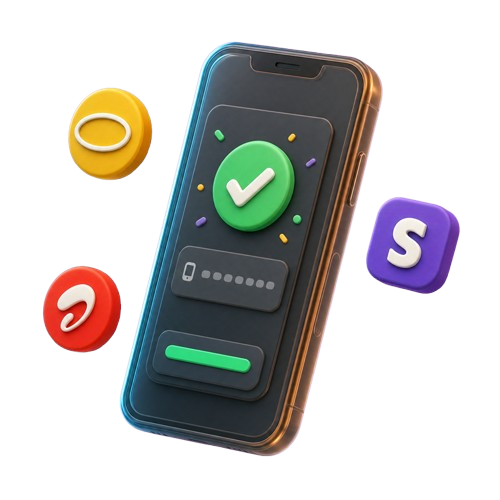
Create a professional dark-themed course thumbnail with the following layout: **Background:** Pure black (#000000) with a very subtle noise/grain texture overlay (low opacity ~4%). Add a single thin horizontal blue (#0070f3) accent line across the very top edge. Faint circular radar rings emanating from the left, centered around the logo area. **Top-left eyebrow label:** Small monospace text badge reading "3-DAY INTENSIVE · 45+ LESSONS" in muted gray (#888), uppercase, ~14px — above the main title. **Left-center text block (main content):** - Title line 1: "Airtel & MTN" in large, ultra-heavy bold white sans-serif (Geist/Inter), ~88px, letter-spacing tight - Title line 2: "Mobile Money" same style, ~88px - Title line 3: "Payment Integration." in the same bold font but colored in electric blue (#0070f3), ~88px - Subtitle below: "From zero to production-ready payments in 3 days. Next.js · DGateway · Stripe" in gray (#888), ~22px, light weight **Bottom stat bar (full width, separated by a thin dark line at top):** Four equally spaced stat blocks side by side: - "3" large bold white + label "DAYS" in gray mono - "10" large bold white + label "MODULES" in gray mono - "45+" large bold white + label "LESSONS" in gray mono - "50K" large bold blue (#0070f3) + label "UGX" in gray mono **Right side (35% of image):** A vertical stack of 3 floating dark cards (#111111 background, #333 border, 8px radius), slightly overlapping, with a soft blue glow behind them: - Card 1: MTN Mobile Money logo (yellow M icon) + label "MTN MoMo" - Card 2: Airtel Money logo (red A icon) + label "Airtel Money" - Card 3: Stripe logo (purple S) + label "Stripe Cards" Each card has a small green dot indicating "connected/active" status. Cards are tilted very slightly (~3°) and staggered for depth. **Corner decorations:** Thin L-shaped corner markers in #333 at all four corners of the image — minimal, architectural feel. **Bottom-right corner:** A small row of 3 rounded tech badge icons: Next.js (white N), TypeScript (blue TS), DGateway (blue orbit icon) **Lighting:** Soft blue (#0070f3) radial glow behind the right-side cards. No other color accents — keep it clean and minimal. **Typography mood:** Geist Sans — ultra-bold titles, mono labels. Clean, modern, no decorative fonts. **Aspect ratio:** 16:9 (1280x720) **Style:** Premium dev course cover — dark minimal SaaS aesthetic, architectural corner accents, noise texture. Think Vercel meets African fintech. Professional, trustworthy, high-value.
How to use
Use this prompt in any image AI to generate a course thumbnail for mobile money / payment integration tutorials. Adjust the title, stat bar numbers, provider cards, and tech icons for your specific course.
JB Blog Thumbnail — AI Tool Calling with Custom UI
A 16:9 dark editorial blog thumbnail, 1920x1080, matching the jb.desishub.com tutorial style: BACKGROUND: Deep near-black navy (#08090F) with a very subtle dotted grid pattern across the entire canvas, faint radial glow from center. TOP-LEFT (small): tiny light-gray monospace text "jb.desishub.com ~12px monospace" TOP-RIGHT (decorative): an isometric cluster of 3 translucent glass cubes floating in mid-air, edges glowing with cyan-blue light (#22D3EE), small particle dust around them. LEFT HALF (visual): a glowing translucent dark chat bubble with soft cyan neon outline, floating in mid-air. Emerging FROM the chat bubble: three small holographic UI components materializing in mid-render — a product card, a button labeled "Order", and a category-grid widget — each connected to the chat by thin animated cyan light trails. Around the bubble, three floating hex-shaped tool icons in violet-blue with a soft glow ring (like a radar) connecting them. Depth-of-field bokeh. RIGHT HALF (typography area): - Top: small all-caps gray text "TUTORIAL · STEP-BY-STEP GUIDE" - Title (HUGE, bold white sans-serif): "AI Tool Calling" - Accent line (cyan #22D3EE, condensed bold): "Chat → Tools → Real UI" with a thin underline beneath it - Subtitle (white, regular): "Render React components inline." BOTTOM-RIGHT: a row of 5 small dark rounded-square icons (chat bubble, Anthropic A, Vercel triangle, Zod shield, TS badge) with soft glow. Style: dark editorial, premium developer-magazine, cinematic glow, photoreal 3D with soft cyan/violet rim light. Color palette: deep navy black, electric cyan, soft violet accents, pure white text. NO other text inside the illustration beyond what is overlaid.
How to use
Paste into Gemini Image / Midjourney / DALL-E at 16:9. For best text fidelity, generate the iso-3D illustration only and overlay the typography in Figma using the jb.desishub.com template.
JB Blog Thumbnail — CRUD to MCP Server
A 16:9 dark editorial blog thumbnail, 1920x1080, matching the jb.desishub.com tutorial style: BACKGROUND: Deep near-black (#08090F) with a faint dotted grid and a soft radial cyan glow behind the central illustration. TOP-LEFT (small): tiny light-gray monospace text "jb.desishub.com ~12px monospace" TOP-RIGHT (decorative): a single floating isometric Prisma-style hex prism in translucent dark glass with bright cyan edge glow, surrounded by a few small light particles. CENTER VISUAL: A side-by-side iso-3D scene — LEFT: a translucent glass cube labeled with faint "API · /contacts" hint, representing a Next.js + Prisma CRUD server, glowing soft violet from within. RIGHT: a clean stylized Claude Desktop app window outline floating in the air. BETWEEN them: a glowing thick cyan "plug-and-cable" connector pulsing with light particles, clearly labeled "MCP" in the middle on a small floating chip. Both ends crackle with soft electric arcs. LEFT TYPOGRAPHY OVERLAY (over a slightly darkened gradient): - Top: small all-caps gray text "AI ERA GUIDE · MCP TUTORIAL" - Title (HUGE, bold white, stacked): "CRUD → MCP" - Accent (cyan #22D3EE bold with underline): "Next.js · Prisma · Claude" - Tagline (white, regular): "Let Claude Desktop drive your app." BOTTOM-RIGHT: a row of 5 small dark rounded-square icons (Next.js, Prisma, Anthropic A, Cursor, Windsurf) with soft glow. Style: cinematic, dark editorial, photoreal iso-3D, deep depth-of-field bokeh, cyan + violet rim lighting on glass surfaces, premium developer magazine cover aesthetic. NO text inside the illustration beyond the "MCP" chip and what is overlaid on the left.
How to use
Paste into Gemini Image / Midjourney / DALL-E at 16:9. For best text fidelity, generate the iso-3D illustration only and overlay the typography in Figma using the jb.desishub.com template.
JB Blog Thumbnail — RAG Agent Platform
A 16:9 dark editorial blog thumbnail, 1920x1080, matching the jb.desishub.com tutorial style: BACKGROUND: Deep midnight blue-black (#070C18) with a faint dotted grid and a soft volumetric cyan haze behind the central visual. TOP-LEFT (small): tiny light-gray monospace text "jb.desishub.com ~12px monospace" TOP-RIGHT (decorative): a small isometric Qdrant-style glass cube cluster (3 cubes stacked) glowing cyan, with tiny floating dot particles around. RIGHT-HALF VISUAL (iso-3D scene): A large translucent dark glass sphere floating in mid-air, filled with hundreds of small luminous cyan dots arranged in a swarm — clearly representing vector embeddings in 3D space. A bright cyan beam of light enters the sphere from the left (a query), converges on a small cluster of brighter dots (the top-K retrieved chunks), and a soft cyan answer glow exits from the right. Around the sphere, four small floating glass icons in a radar arrangement: a PDF page, a DOCX file, a URL link chain, and a Q&A speech bubble — each connected to the sphere by thin flowing light streams. LEFT TYPOGRAPHY OVERLAY: - Top: small all-caps gray text "TUTORIAL · STEP-BY-STEP GUIDE" - Title (HUGE, bold white, stacked): "RAG Agent\nPlatform" - Accent (cyan #22D3EE bold with underline): "Go · Qdrant · Vercel AI Gateway" - Tagline (white, regular): "Multi-tenant. Streaming. Grounded." BOTTOM-RIGHT: a row of 5 small dark rounded-square icons (Go gopher silhouette, Qdrant, Postgres elephant, Redis, Vercel triangle) with soft glow. Style: cinematic, atmospheric, dense, photoreal iso-3D with glowing particles, deep midnight blue + electric cyan palette, premium developer magazine cover. NO text inside the illustration beyond what is overlaid.
How to use
Paste into Gemini Image / Midjourney / DALL-E at 16:9. For best text fidelity, generate the iso-3D illustration only and overlay the typography in Figma using the jb.desishub.com template.
JB Blog Thumbnail — Multi-Model AI Pipelines
A 16:9 dark editorial blog thumbnail, 1920x1080, matching the jb.desishub.com tutorial style: BACKGROUND: Deep near-black (#08090F) with a faint dotted grid and a soft horizontal gradient glow (cyan → violet → warm orange) running left-to-right behind the central visual. TOP-LEFT (small): tiny light-gray monospace text "jb.desishub.com ~12px monospace" TOP-RIGHT (decorative): a small floating isometric tri-prism in translucent dark glass with rainbow rim glow (cyan, violet, gold), suggesting multi-provider routing. CENTER VISUAL (right half, iso-3D scene): Three translucent glass panels floating in a left-to-right pipeline, each with a distinctive colored rim glow: - Panel 1 (cyan glow): stylized "C" mark with a flowing text line — represents Claude drafting prompts. - Panel 2 (violet glow): a structured JSON schema visualization with glowing braces — represents Gemini Flash returning structured data. - Panel 3 (warm gold glow): a beautiful generated photograph appearing mid-render with a sweeping color reveal — represents Gemini Image. Between the panels: glowing arrows / flowing data streams in cyan and gold particles. Soft volumetric light, depth-of-field. LEFT TYPOGRAPHY OVERLAY: - Top: small all-caps gray text "AI ERA GUIDE · PIPELINE TUTORIAL" - Title (HUGE, bold white, stacked): "Multi-Model\nPipelines" - Accent (cyan #22D3EE bold with underline): "Claude · Gemini · GPT" - Tagline (white, regular): "Best model per step. One Gateway." BOTTOM-RIGHT: a row of 5 small dark rounded-square icons (Anthropic A, Gemini diamond, OpenAI gear, Vercel triangle, R2 cloud) with soft glow. Style: cinematic, premium, photoreal iso-3D with multi-colored rim lighting, dark editorial palette accented with cyan + violet + warm gold, magazine-cover aesthetic. NO text inside the illustration beyond what is overlaid.
How to use
Paste into Gemini Image / Midjourney / DALL-E at 16:9. For best text fidelity, generate the iso-3D illustration only and overlay the typography in Figma using the jb.desishub.com template.